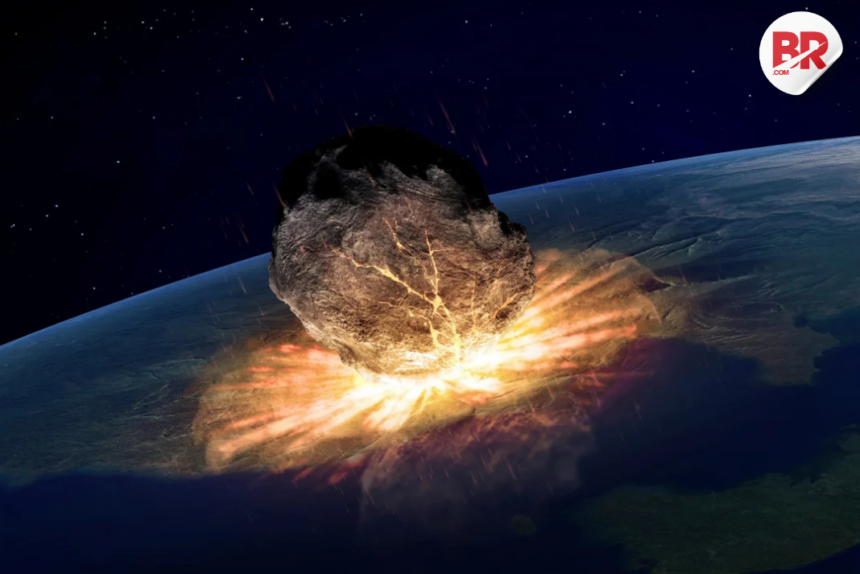
On May 24 at 4:07 PM IST, a giant asteroid—named 387746 (2003 MH4)—will make a dramatic flyby past Earth. Measuring 335 metres wide, this space rock is about the size of a 100-storey building. It’ll zip by at a blistering 30,060 km/h, faster than a jet, faster than a bullet, and fast enough to circle Earth in just over an hour.
But is it dangerous?
Not this time. According to NASA, this asteroid won’t hit Earth. Still, it’s close enough to pay attention. It will pass by at a distance of 6.67 million kilometres—about 17 times the distance from Earth to the Moon. That sounds like a lot, but in space terms, it’s barely a whisper away.
And because it’s big and fast and crosses our orbital path, NASA has officially labeled it a Potentially Hazardous Asteroid (PHA). That’s not fear-mongering—it’s smart science. Asteroids like these don’t pose a threat today, but their future paths could shift, especially if they get nudged by gravity or sunlight.
Why should you care?
Here’s the thing: it only takes one wrong orbit to ruin everything. A rock this big slamming into Earth would be catastrophic. We’re talking fires, tsunamis, shockwaves, and a sun-blocking dust cloud that could send the planet into a cold, dark winter. It’s not just sci-fi—it’s happened before.
That’s why the scientists at NASA’s Centre for Near-Earth Object Studies (CNEOS) track thousands of asteroids constantly. They study not just the rock’s path, but what it’s made of, how it spins, and how sunlight could slowly push it off course—a phenomenon called the Yarkovsky effect.
Also Read What Is the Minuteman III? Inside the US Nuclear Missile Test
And it’s not just the big ones
Just days ago, on May 21, a much smaller asteroid, 2025 KF, flew by just 111,000 kilometres from Earth—less than a third of the Moon’s distance. It was only 23 metres wide, but even that could’ve caused serious damage. Small doesn’t mean safe when it’s falling from space.
And many of these rocks aren’t even solid. Some are “rubble piles”—loose clusters of rock and dust barely held together. They can break apart or change direction with the smallest nudge. In other words: space is messy, and the threat is real.
The future depends on early warnings
CNEOS and other global teams are not just watching the skies—they’re preparing. Programs like NASA’s DART mission are testing ways to deflect dangerous asteroids before it’s too late. It’s not about fear. It’s about being ready.
This time, the asteroid will wave as it passes by. But next time? We might not be so lucky. The real risk isn’t the rock you see—it’s the one you miss.
Also Read Elon Musk Unveils Tesla Robot That Cooks, Cleans—And Learns From YouTube