


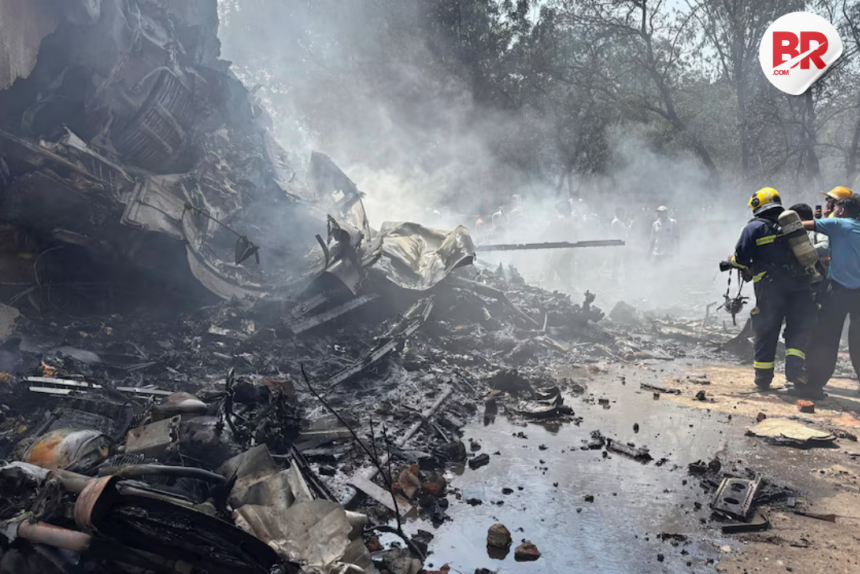
On June 12, a London-bound Air India flight tragically crashed just minutes after taking off from Ahmedabad. The Boeing 787-8 was carrying 242 people. Only one survived. Among the dead were 29 people on the ground.
Nearly a week later, Praful Patel, former Civil Aviation Minister and senior NCP leader, asked a sharp question — Why is Singapore Airlines so silent?
And it’s not a random callout.
Singapore Airlines holds a 25.1% stake in Tata-owned Air India. Not only that, they sit on the board, maintain many of Air India’s wide-body aircraft, and share management responsibilities. Campbell Wilson, the current CEO of Air India, was a top executive at Singapore Airlines’ subsidiary, Scoot.
So why haven’t they spoken up sooner?
Taking to social media platform X (formerly Twitter), Patel didn’t mince words.
“In all the sorrow and din surrounding the Air India crash, there remains a surprising silence — or perhaps ignorance — about the role of a substantial shareholder… Guess the name: Singapore Airlines.”
He continued, calling out their codeshare ties and visible management link.
“They seem to be in hiding. Why this deafening silence, SQ?”
In all the sorrow and din surrounding the Air India crash, there remains a surprising silence — or perhaps ignorance — about the role of a substantial shareholder, and the entity responsible for maintaining a large number, if not all, of Air India’s wide-body aircraft.
Guess the…
— Praful Patel (@praful_patel) June 18, 2025
The IATA code “SQ” refers to Singapore Airlines. And Patel’s question reflects a broader public sentiment: when disaster strikes, should major stakeholders remain quiet?
After days of silence, Singapore Airlines finally issued a brief statement, expressing “deepest condolences” and claiming they were in “close contact” with Tata Sons and Air India. But for many, it felt like too little, too late.
The airline said they were offering “full support and assistance.” But Patel’s point remains: shouldn’t that support come with a public stance, accountability, or at least quicker communication?
Investigations into the crash are currently underway. The Directorate General of Civil Aviation (DGCA), Air India’s internal safety board, and a high-level committee under the Union Home Secretary are all involved. The final report is expected in three months.
But as questions around responsibility and communication swirl, Praful Patel’s remarks strike a nerve. When a major aviation partner stays quiet after a disaster, it doesn’t just raise eyebrows — it raises questions of ethics, leadership, and transparency.
For now, Singapore Airlines has spoken. But many are still asking, Why did it take so long?
Also Read Seconds Before the Crash: What the Air India Pilot Said in His Final Call?

