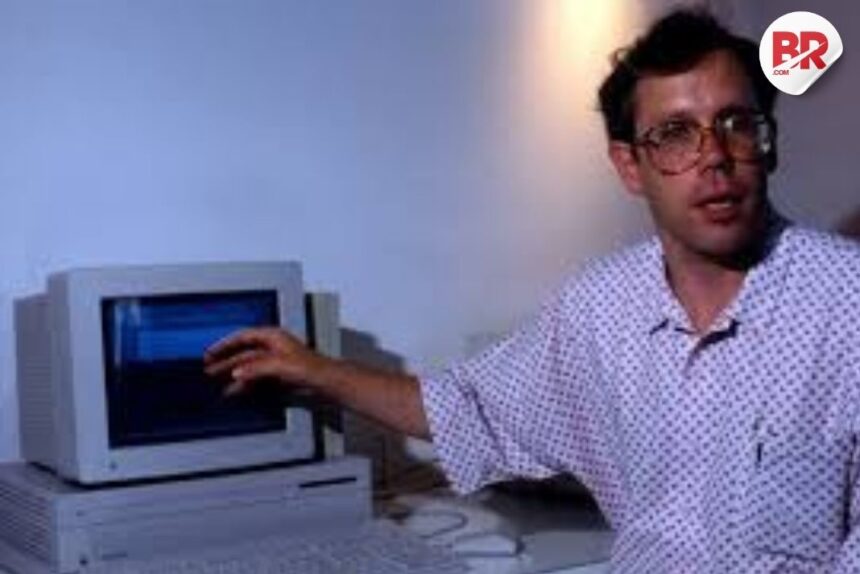
Bill Atkinson, an important Apple engineer who helped design the easy-to-use computer screens for the Lisa and Macintosh computers, has passed away at the age of 74. His family shared that he died of pancreatic cancer. Apple’s CEO, Tim Cook, expressed his sadness and shared kind words about Atkinson on X (formerly Twitter).
Tim Cook said, “We are very sad to hear about Bill Atkinson’s passing. He was a true visionary whose creativity and work on the Mac will inspire us forever. Our thoughts are with his family.”
Bill Atkinson was the creator of QuickDraw, a key software that helped show shapes, text, and pictures on the Lisa and Macintosh computers. QuickDraw was built into the computers and made it possible to have a visual desktop with icons for folders, files, and apps.
Atkinson is also known for inventing important computer features like “pull-down” menus and the “double-click” action, where you open files or programs by clicking the mouse twice. Before these inventions, most computers only showed text and required users to type commands, which was harder to use.
QuickDraw was first made for the Lisa computer, released in 1983. The Lisa had many user-friendly features but was very expensive — about $10,000 back then (which is like $33,000 today). Because of the high price, the Lisa did not sell well.
QuickDraw later became the base for the Macintosh’s successful visual interface. This idea of graphical computers was inspired by a project called “Dynabook” at Xerox’s research center in the 1970s. In 1979, Steve Jobs and a small Apple team, including Atkinson, saw a private demo of this work. Since they couldn’t see the software code, they made their own improvements and added new features.
After the Macintosh came out in 1984, Atkinson created HyperCard, a program that combined text, images, and videos in an easy-to-use way. HyperCard is seen as an early step toward the World Wide Web.
Atkinson was studying neurobiology for his Ph.D. when Steve Jobs convinced him to join Apple as the 51st employee. They worked closely during the early 1980s on the Macintosh. When Jobs left Apple in 1985 to start a new company called Next, Atkinson decided to stay because he wanted to finish working on HyperCard