


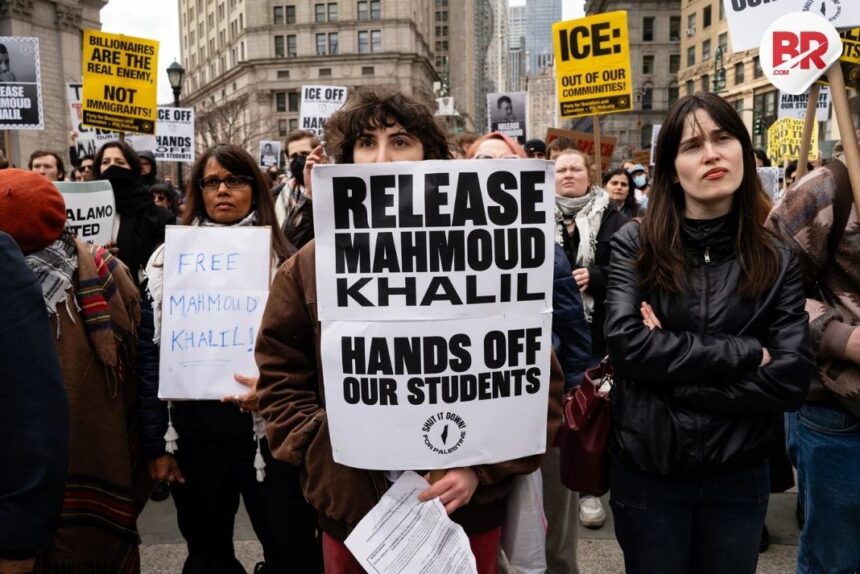
Mahmoud Khalil, a 30-year-old Palestinian student at Columbia University, is at the center of a controversial legal battle. The U.S. government seeks to deport Khalil, a legal U.S. resident, claiming he is a “national security risk” because of his participation in pro-Palestinian protests. This case has sparked debates over free speech, due process, and the use of immigration law for political purposes.
Background on the Case:
Khalil, an international affairs student, had been involved in protests at Columbia University opposing Israel’s Gaza campaign. As a negotiator for the protests, he advocated for Palestinian rights, but the Trump administration has labeled his views as “antisemitic and pro-Hamas.” Despite the accusations, Khalil has not been charged with any crimes.
The case took a dramatic turn when Immigration Judge James E. Comans ruled that Khalil could be deported. The government invoked a rarely used statute to label Khalil a threat to national security, citing “serious foreign policy consequences.” This move was backed by Secretary of State Marco Rubio, although the exact details of the statute remain largely undisclosed.
Also Read: Supreme Court gives boost to Trump administration’s deportation plans under Alien Enemies Act
Detention and Legal Fight:
Khalil is currently detained at a facility in Louisiana, nearly 1,000 miles from his pregnant wife and legal team. His detention is a significant hardship for his family, and his lawyers argue that the deportation is an infringement on his First Amendment rights. They assert that his involvement in protests should be protected as free speech, not grounds for removal from the country.
Khalil’s legal team is preparing to appeal the ruling, which they argue violates due process. They maintain that the case is an attempt to suppress dissent, with attorney Marc Van Der Hout calling the hearing a “charade of due process.” They claim that the government is using immigration laws to target political activism, rather than addressing any legitimate security concerns.
The Government’s Position:
The U.S. government’s stance is that Khalil’s actions present a threat to national security. Officials argue that his participation in protests, which they allege were anti-Israel and supportive of Hamas, is harmful to U.S. foreign policy interests. However, no direct evidence has been presented linking Khalil to criminal activity or terrorism.
The Trump administration’s actions have raised concerns about the politicization of immigration law. Critics argue that this case sets a dangerous precedent, where individuals can be punished or deported for their political beliefs, even when those beliefs do not cross into criminal behavior.
Also Read: Judge Blocks Trump Migrant Parole Revocation: What It Means for 450,000 Lives
Columbia University’s Role:
Columbia University has also found itself in the spotlight due to this case. The university lost $400 million in federal funding after being accused of not doing enough to combat campus antisemitism. Critics argue that the administration failed to address concerns related to Khalil’s involvement in protests, although the university has not been directly linked to the deportation proceedings.
Criticism and Public Outcry:
Khalil and his supporters have publicly criticized the legal proceedings, with Khalil describing the hearing as a “charade of due process.” His lawyers argue that the administration is weaponizing immigration laws to stifle dissent, particularly in relation to Middle Eastern and Palestinian viewpoints.
Many civil rights organizations have rallied behind Khalil, calling for the protection of free speech rights. They argue that deporting him for participating in peaceful protests sends a dangerous message about the state of democracy and political expression in the U.S.
The case of Mahmoud Khalil has sparked a wider conversation about the balance between national security and individual rights.
While the government argues that Khalil’s actions pose a threat to U.S. interests, his supporters see this as a blatant attempt to silence dissent. As the legal battle continues, the outcome could have significant implications for free speech and the protection of political activism in the United States.
Also Read: Why Did the Trump Administration Revoke Indian Scholar “Ranjani Srinivasan’s Visa”?

