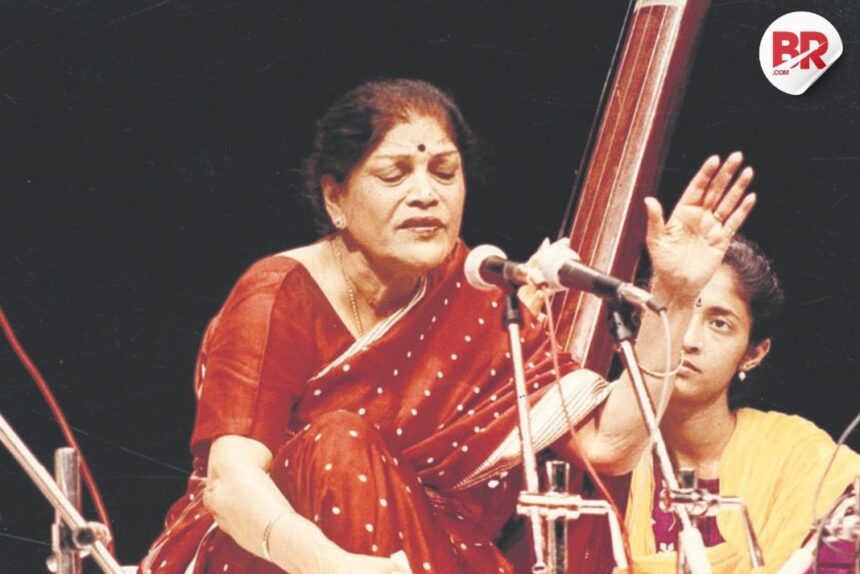
Shobha Gurtu, often called the “Thumri Queen,” was a legendary Indian singer known for her powerful and expressive voice. She brought the rich folk music of North India, especially thumri and dadra, to Maharashtra and gave it a new life. A recent event held at the Swatantrya Veer Savarkar Auditorium in Mumbai celebrated her 100th birth anniversary. The Maharashtra government’s cultural department organized the concert, and more events are planned throughout the year.
A Unique Musical Journey
Shobha Gurtu’s music blended deep emotions with traditional Indian folk styles. Her performances were full of life and feeling, turning every concert into a memorable experience. Experts say she didn’t just follow in the footsteps of other great singers like Siddheshwari Devi—she created her own unique style.
She learned from her mother, Menakabai Shirodkar, a renowned dancer and singer, and from her teacher, Ustad Ghamman Khan of the Gwalior gharana. With these influences, she developed a voice and performance style that was both strong and full of emotion.
Bringing Thumri to Life in Maharashtra
One of her students, Dhanashree Pandit, explained that Shobha Gurtu made thumri popular in Maharashtra at a time when it was losing attention due to the rise of film music and other modern styles. While singers like Begum Akhtar revived ghazals, Gurtu brought back poorvi thumri (an eastern form of thumri) with passion and style.
By the 1960s, she was a well-known figure in the Indian music world and performed at major music festivals. Her large collection of songs included not only thumri, but also kajri, sawani, hori, and jhoola—songs that celebrated nature, festivals like Holi, and human emotions like love and longing.
More Than a Singer
Those who knew her said that her concerts were magical. Shobha Gurtu often performed with expressive gestures, engaging with her audience through her music and expressions. Her concerts were a mix of music, storytelling, and subtle acting. She had the ability to turn a serious moment into something playful with just a look or a gesture.
Pandit shared how learning from Gurtu was not easy at first. Unlike other classical styles like khayal, which follow strict rules, thumri is more open and emotional. Gurtu didn’t teach through fixed methods—she simply sang, and her students learned by following her flow. Over time, Pandit understood the depth and soul of thumri through this style.
Personal Life and Legacy
Shobha Gurtu was a humble and warm-hearted person. Her daughter-in-law, Priya Gurtu, described her as a kind and cheerful soul. Gurtu had three sons—Trilok, a globally known drummer; Ravi, a talented film music composer who passed away young; and Narendra, a businessman with a love for tabla.
Gurtu was also known for blending different ragas in her thumris, adding richness and variety. Songs like “Sawan ki ritu aayi sajaniya,” “Rangee sari gulabi chunariya,” and “Chaitar chunari rangaa de” remain popular, especially on YouTube. She also sang hit songs in films, such as “Nathaniya ne hai Ram bada dukh deena” and “Sainyya nikas gaye.”
Recognitions and Admirers
She received many awards in her lifetime, including the Sangeet Natak Akademi Award (1987), Padma Bhushan (2002), Lata Mangeshkar Puraskar, and Maharashtra Gaurav Puraskar.
Many famous musicians admired her, including Lata Mangeshkar, Pandit Bhimsen Joshi, Ustad Zakir Hussain, and Kishori Amonkar. Gurtu, Amonkar, and artist Prafulla Dahanukar were close friends and often called themselves “The Goa Girls’ Club.” They all stood out as bold women who challenged traditional roles in the arts.
Shobha Gurtu was born in February 1925 in Belagavi, Karnataka, and passed away in Mumbai in September 2004. Her music continues to inspire and touch hearts even today.